






Why Vision Inspection is Becoming Essential in Automated Print & Apply Labeling Systems
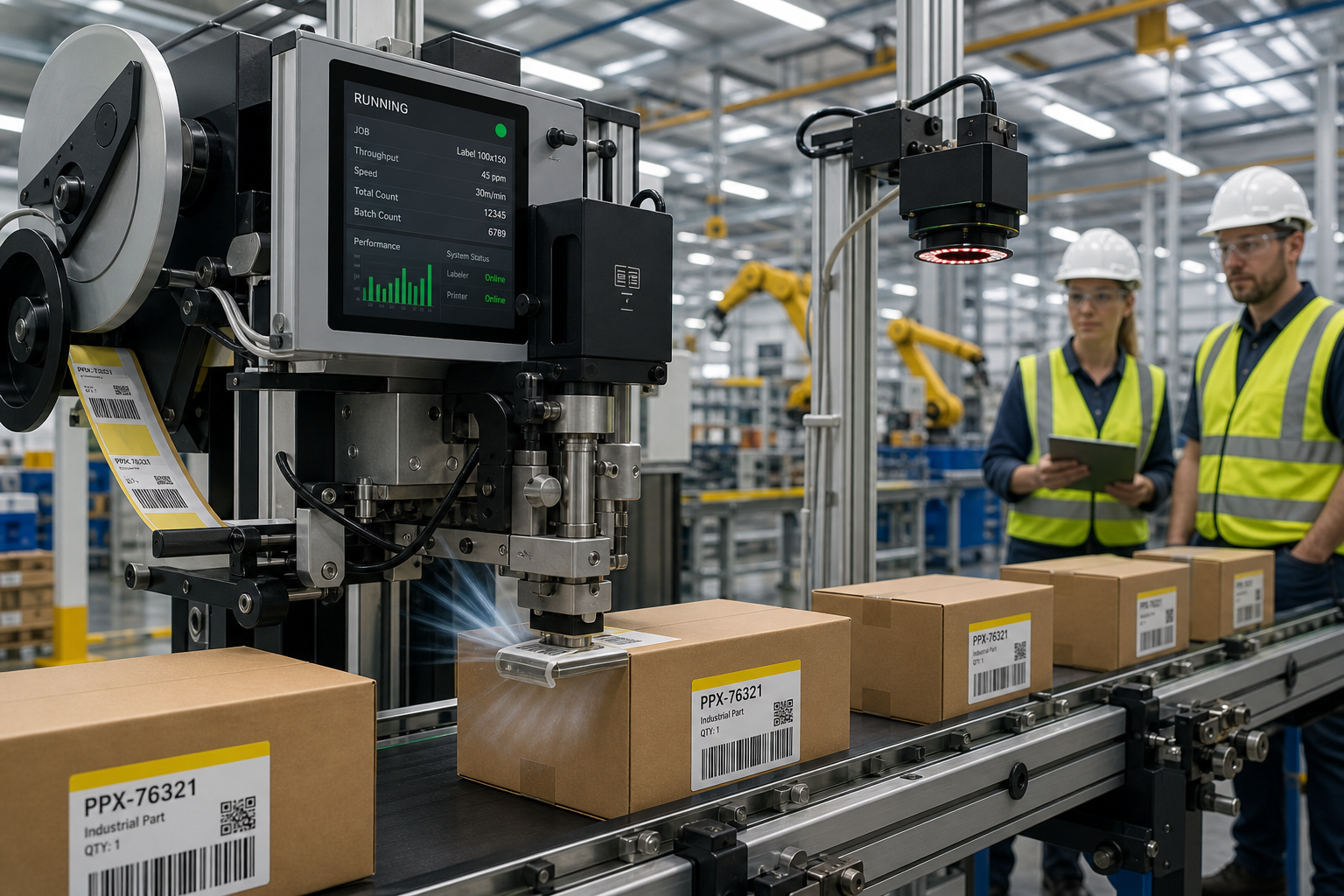
As manufacturing continues to automate, simply applying a label is no longer enough. Today’s production lines demand greater accuracy, traceability, and quality assurance than ever before. That’s why many manufacturers are integrating vision inspection directly into their print-and-apply labeling systems. By combining automated labeling with real-time vision verification, manufacturers can significantly reduce labeling errors, eliminate manual inspections, and improve overall production efficiency.
More Than Just Applying a Label
A traditional print-and-apply system prints a label, applies it to the product, and moves on to the next package. While this process is highly efficient, it still relies on the assumption that every printed label is present and correct. An integrated vision system adds another level of quality control by inspecting every label before it is applied. This ensures that the label is readable, correctly printed, and meets the customer’s quality requirements before the product leaves the labeling station. A second option is to inspect the label after it is applied to the product. This allows the inspection previously mentioned, as well as verifying the label is present and applied to the correct position on the product.
How an Integrated Print & Apply Vision System Works
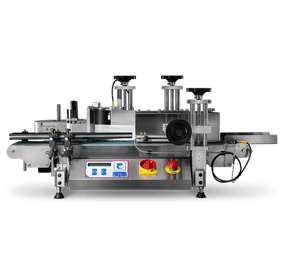
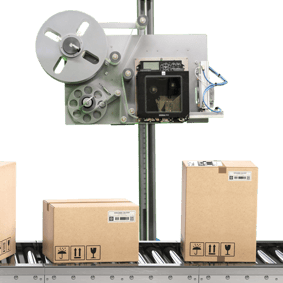
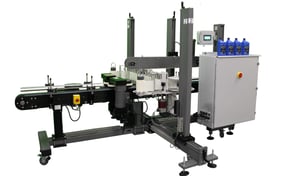
One example is LabelPack Automation’s custom Model 410TB Print & Apply System equipped with Smart Tamp technology and integrated vision inspection.
Here’s how the process works:
Label Inspection before application
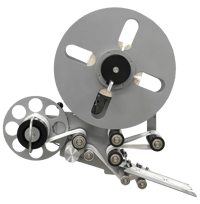
- The label is printed and advanced onto an extended peel plate.
- The label is inspected by the vision system.
- If positive, the label is advanced onto the tamp and applied to the product.
- If the label is out of specification, it is advanced to the wasted disposal system.
- The next label is advanced onto the extended peel plate and inspected
This closed-loop process ensures every applied label has already been verified.
Label Inspection after application to the product
- A product sensor detects the incoming carton or package on the conveyor.
- The system delays the label application until the product reaches the correct position.
- The Smart Tamp extends toward the carton.
- A sonic sensor measures the exact position of the product, allowing the tamp cylinder to stop at the proper application distance, allowing you to label variable heights of products.
- As the tamp pad retracts, a controlled burst of air transfers the label to the carton.
- A secondary brush, if necessary, smooths the label onto the panel for a consistent, secure application.
- While the labeled carton continues down the conveyor, the label is presented to the integrated vision inspection station.
- The vision system verifies that the label meets all programmed inspection criteria allowing the product to continue to advance. If the system detects an out of specification condition, the product can be flagged or kicked offline with a reject station.
The Role of Vision Inspection
Modern vision systems do much more than simply detect whether a label exists. Integrated systems such as the Zebra Iris GTX Smart System paired with the Zebra 4Sight Vision Controller can inspect numerous label characteristics, including:
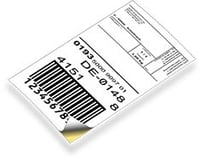
- Barcode readability
- Human-readable text
- Print quality
- Missing or incomplete print
- Label Position
- Variable data accuracy
- Serialization and lot codes
- Date and expiration codes
Rather than relying on random sampling or manual inspection, every label is automatically verified.
Why Manufacturers Are Investing in Vision Systems
Reduce Costly Labeling Errors
An unreadable barcode or incorrect product label can lead to rejected shipments, customer complaints, product recalls, or expensive rework. Vision inspection catches these problems before they leave the production line.
Improve Product Traceability
Many industries- including food, beverage, pharmaceutical, medical device, and consumer packaged goods- require complete traceability. Verifying every barcode and variable data field helps maintain compliance while improving customer confidence.
Eliminate Manual Inspection
Without automated inspection, operators often perform periodic spot checks. Vision systems inspect every label consistently without slowing production or introducing human error.
Minimize Downtime
If a printer develops a print quality issue, the system immediately identifies the problem instead of allowing hundreds or thousands of defective labels to reach finished inventory.
Increase Customer Confidence
When every label is verified before application, manufacturers gain greater confidence that each product leaving the facility meets quality standards that customers expect.
A Smarter Labeling Solution
By integrating precision label application with intelligent vision inspection, manufacturers create a complete labeling solution-not just an automated applicator. LabelPack Automation designs custom systems that combine reliable print-and-apply technology with advanced inspection capabilities tailored to each customer’s production environment. Whether applying corner-wrap labels, flag labels, or standard product identification labels, integrated vision systems help ensure every label is accurate.
As quality requirements continue to increase across many different sectors, vision-guided print-and-apply systems are quickly becoming an essential part of modern packaging operations. If you’re looking to improve labeling accuracy, reduce costly errors, or automate quality inspection, LabelPack Automation can design a custom solution built around your application.